

Although the economy of the Kingdom of Hungary functioned and grew, its room for maneuver became increasingly limited to defense. While the Ottoman Empire continued to draw on expanding resources, Hungary’s priority was simply the protection of its borders. Defense against the Ottomans has long imposed a heavy burden on the budget. Although no detailed, accurate, and continuous data sets survive from the period prior to 1526, various sources—including ambassadorial reports, accounts, budget proposals, and other indirect data—indicate that the Hungarian king’s revenues were by no means insignificant by European standards. Most estimates placing them at around 250,000–350,000 gold florins annually.
The Benefits of the Czech-Hungarian Personal Union and Foreign Assistance
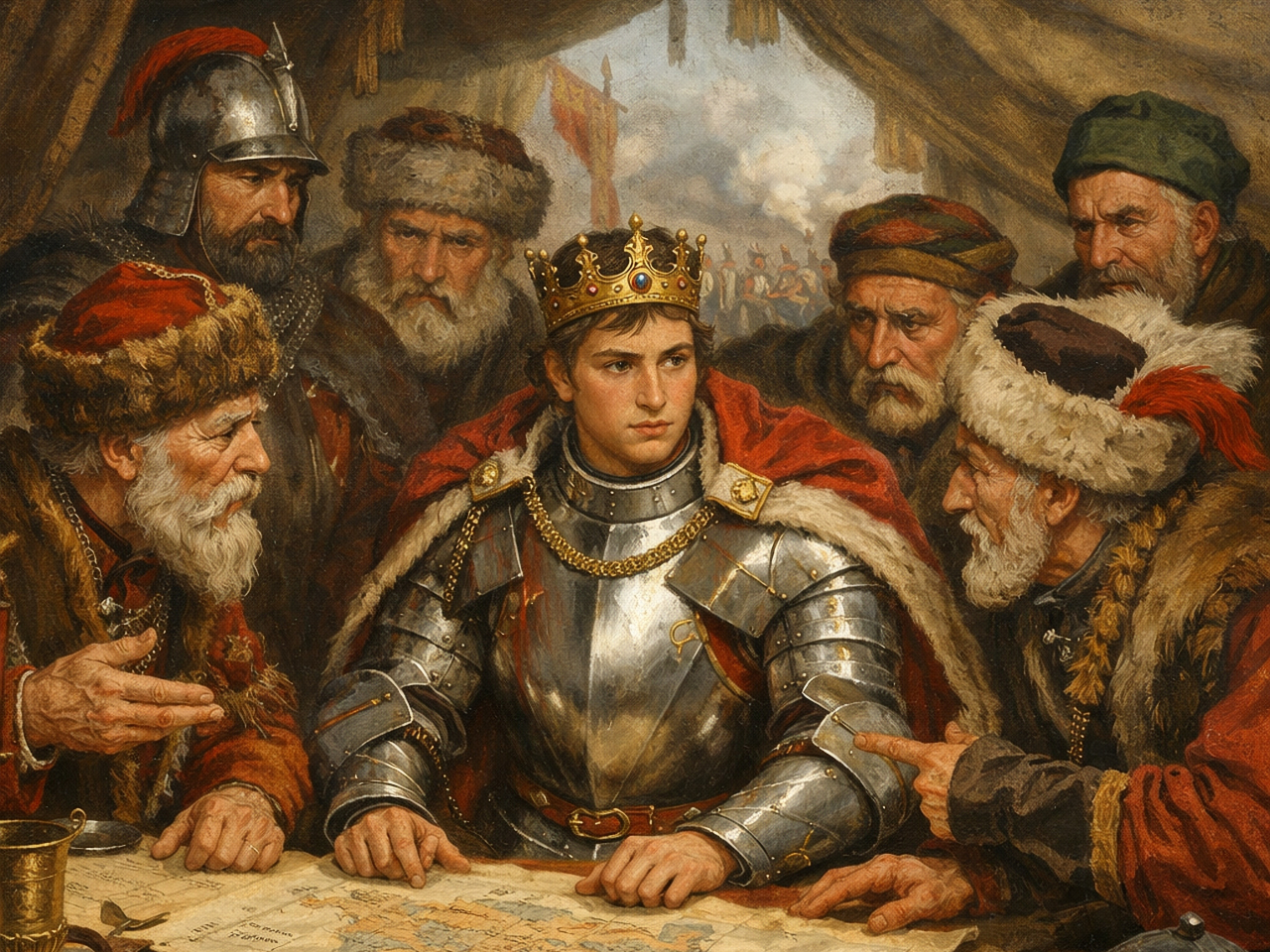
However, Hungary did not have to rely solely on its own resources. Since both King Vladislaus II and King Louis II were also kings of Bohemia, the resources of the lands of the Bohemian Crown could be mobilized for the defense effort. Although the personal union provided some Czech support, it did not create a joint army or a unified financial system. Czech assistance alleviated the pressure to some extent, but it could not alter the fundamentally unfavorable balance of power. In practice, this support was more of a supplement, a form of aid that depended on the willingness of the Czech estates. While it did increase the forces available against the Ottomans, it did not alter the balance of power, which remained overwhelmingly unfavorable to Hungary.
Finally, to present a more accurate picture of the balance of power, it is also necessary take into account the financial aid provided by Venice and the Papacy for the war against the Ottoman Empire. The exact amount of these funds is just as difficult to determine as the revenues of the Hungarian monarch, but they were by no means insignificant. Venice paid subsidies exceeding 30,000 ducats on several occasions. Papal grants also amounted to considerable sums, as evidenced by the 50,000-ducat subsidy received from Rome as late as 1526.
The Adversary
The Ottoman Empire followed a markedly different trajectory. In the early 16th century, Selim I integrated vast new territories into the empire, greatly increasing its resources. The empire’s territory expanded by roughly one third, and it was this period that the densely populated and wealthy region of Egypt, along with the entire Middle East—including Syria—and the northern part of present-day Iraq came under Ottoman rule.
By the early 1520s, the population of the empire—which by then covered approximately 1.5 million square kilometers—is estimated to have reached 12 million. Although territorial and demographic growths are important indicators, their significance cannot be understood solely in terms of size and population. The real turning point was not simply territorial expansion, but the immense financial strength that resulted from it. In the years immediately preceding the Battle of Mohács, the empire’s central revenues had already exceeded 2.5 million gold coins, and its total resources had surpassed 8 million. The difference becomes clearer when one considers that the administration of the empire and the maintenance of an army of roughly 170,000 men—which included all military units—posed no difficulty. In fact, unlike its Hungarian counterpart, the Turkish treasury generated a surplus year after year.
In terms of resources are concerned, the decades leading up to the Battle of Mohács were precisely the period in which the disparity between Hungary and the Ottoman Empire widened dramatically.
Logistics
A key difference, however, lay not only in financial resources but also in logistics. Even the mobilization and supply of a medium-sized army posed a serious challenge for Hungary, and a sizeable army force could usually be assembled only by late summer. By contrast, the Ottoman Empire operated one of the most efficient military apparatuses of the era. Rapid mobilization combined with swift transportation of supplies and military equipment enabled the Ottomans to field an army against Hungary that the Hungarian state would have been unable to counter in the long term.
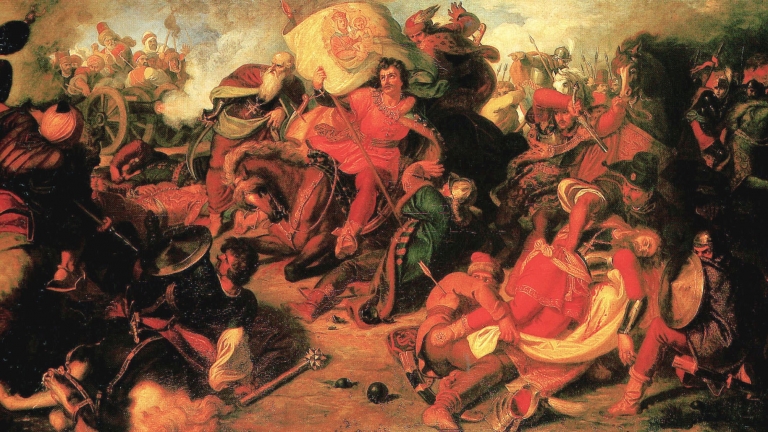
In 1526, the Hungarian military leadership thus faced not only an adversary with twice its strength, but also one capable of deploying such forces at will. This situation illustrates that, by this time, the fate of the Kingdom of Hungary was determined far more by Istanbul’s financial, military, and administrative power than by decisions made in Buda.