The 1990s
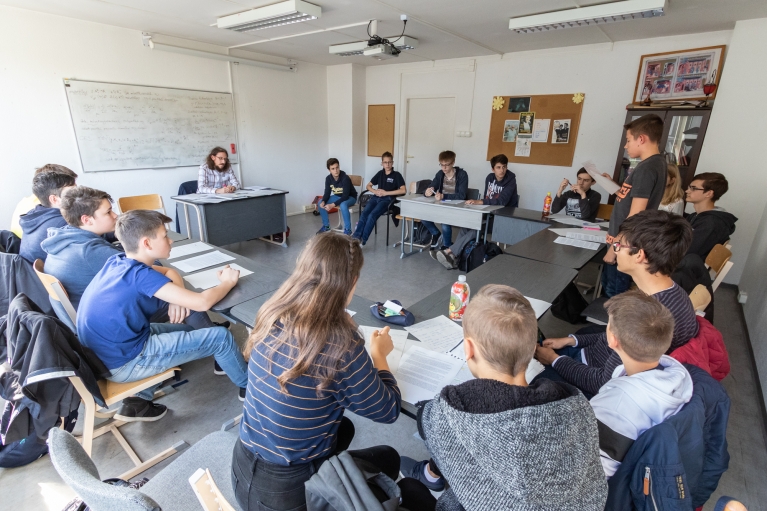

Although Mathias Corvinus Collegium is now Central Europe’s largest educational institution and research center, our journey began with modest roots. Founded in 1996 by the Tombor family, MCC started with just a handful of students and faculty. Despite our small size, we were driven by a mission: to build an institution that supports Hungary’s most talented young people, inspiring them to create a better future for our country.
Initially, our programs focused on high school and university students, addressing Hungary’s need for hands-on professional development. Our students gained invaluable insights from accomplished professionals with successful careers both domestically and internationally. Early on, MCC also established in-house tutoring, launched a monthly lecture series featuring renowned speakers, and hosted study abroad opportunities—small yet pivotal steps that laid the foundation for our growth.
Today, MCC’s capacity has expanded significantly, but our vision remains steadfast. The guiding principles we embraced from the beginning continue to shape our approach as we prepare the next generation of leaders for Hungary and beyond.
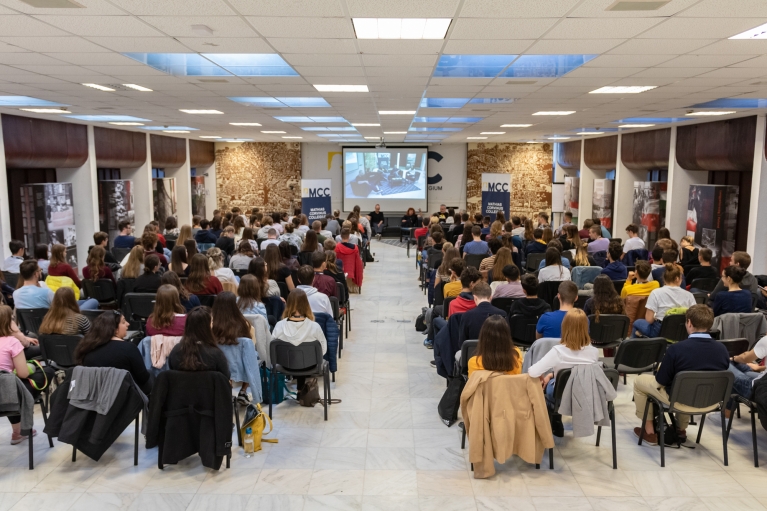
Under the leadership of General Director Dr. Miklós Maróth, MCC took a significant step in September 2001 by opening its first residence hall on Gellért Hill, housing 47 students. This milestone marked a transformation from a classroom-based model to a community-based approach to education that remains central to MCC’s mission today.
In these early years, MCC offered two-year certificate courses across various disciplines, including law, economics, social sciences, international relations, and communication. Expanding our educational reach, MCC entered the book market as a co-publisher in 2008. Since then, we have published hundreds of titles in Hungarian, English, and German. Our goal is straightforward: for Hungarians to become well-rounded and knowledgeable citizens, they must have access to essential literature from Hungary and around the world.
In 2009, we introduced the Leadership Academy, providing students with the unique skills and perspectives essential for exceptional leadership. Although it has grown significantly since its inception, the Leadership Academy remains one of MCC’s most popular programs, preparing the next generation of Hungarian leaders with a broadened worldview and a commitment to excellence.
The 2010s marked MCC’s transformation into an international institution. With Hungary’s large and vibrant diaspora, we recognized that our mission to elevate the education, skills, and talent of Hungarians would extend beyond the country’s borders.
In 2013, we launched our first Transylvanian High School Program in Kolozsvár (Cluj-Napoca), followed by Székelyudvarhely (Odorheiu Secuiesc). This effort grew in 2018 with the addition of a University Program in Kolozsvár, strengthening our commitment to serve Hungarian communities abroad. In 2015, MCC opened its doors to elementary students through the Youth Talent Program, which provides young learners with practical skills beyond traditional school curricula, helping them discover their unique talents and fostering a strong foundation for future academic and professional success. For MCC, no age is too young to start preparing students for their futures.
In 2017, we broadened our program portfolio with public affairs training, beginning with the Transylvanian School of Politics. This program equips young Transylvanian Hungarians with leadership skills to represent and serve their communities effectively. Additional public affairs programs followed, including the Transcarpathian Public Leadership Training Program and the Women’s Public Leadership Program.
2018 marked further milestones with the introduction of the Roma Talent Program, designed to support the educational and professional growth of Hungary’s underprivileged Roma community. That year, we also expanded the University Program with the addition of a School of Psychology.
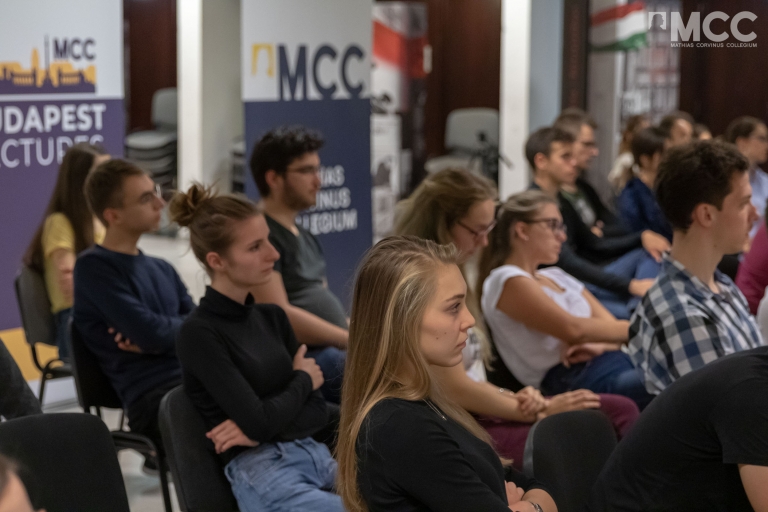
In 2019, MCC’s commitment to the study of public affairs took on new dimensions with the establishment of the MCC Research Institute, aimed at exploring contemporary social issues with academic rigor in accessible formats for the broader public. In the same year, we launched notable events like the MCC Budapest Summit and the Budapest Lectures, attracting scholars and experts worldwide. Additionally, the Debate Academy began in 2019 to foster dialogue, encouraging respectful and meaningful exchanges on pressing issues.
In June 2020, Hungary’s parliament recognized the impactful work of Mathias Corvinus Collegium by granting it a 10 percent stake in both MOL and Gideon-Richter. This support enabled MCC to secure ownership of its Somlói út campus and significantly expand its public activities, both domestically and internationally, ensuring the sustainability of its tuition-free programs. To strengthen our mission, MCC also underwent an organizational transition, with the founding Tihanyi Foundation replaced by the new Mathias Corvinus Collegium Foundation. Zoltán Szalai continues as Director General, with Dr. Balázs Orbán serving as Chair of the Board of Trustees.
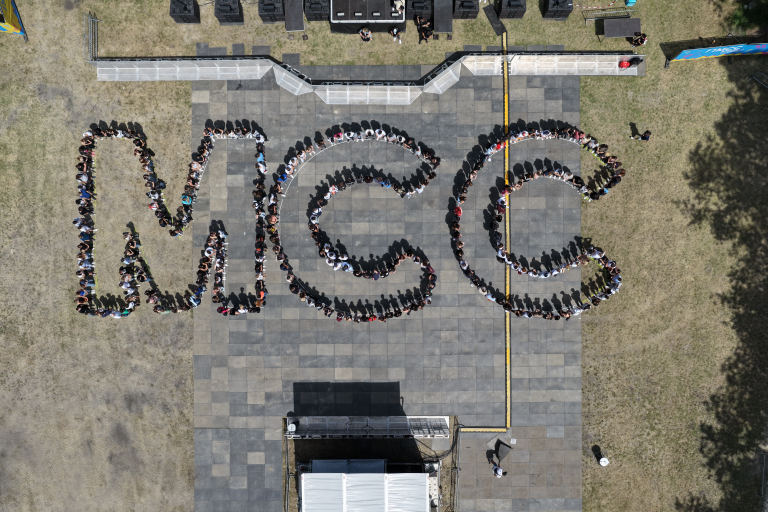
In 2021, MCC also launched MCC Feszt in Esztergom, a three day festival combining intellectual discussions, cultural programs, and music performances. Since its inaugural year, the festival has grown into one of the region’s most significant intellectual and cultural gatherings, attracting tens of thousands of visitors as well as renowned Hungarian and international speakers, including Tucker Carlson, Michael Knowles, Peter Frankopan, Samir Saran, Konstantin Kisin, and Dennis Prager.
The 2020s also saw the establishment of MCC’s first center outside the Carpathian Basin: MCC Brussels. Led by Frank Furedi, MCC Brussels has quickly become a dynamic think tank in the heart of Europe, fostering discussions on the key issues shaping the continent’s future.
Over the past years, MCC has experienced significant growth both academically and geographically. While around 3,000 students participated in its programs in 2020, by 2025 more than 8,000 students across the Carpathian Basin had joined the MCC community, representing an increase of more than two and a half times in just five years. MCC’s institutional presence expanded just as dynamically: from operating in 10 educational centers in 2020, MCC’s tuition-free programs became available in 30 locations by 2025 across the Carpathian Basin.
Committed to safeguarding and renewing (Re)built Heritage, MCC has transformed historic buildings across the Carpathian Basin, restoring architectural landmarks that had often been neglected or left without a function. Among them are the former Dudek House in Oradea, Aranybika Hotel in Debrecen, Little Hilton in Győr, and the Takáts House in Szombathely. From Szeged to Veszprém and Székesfehérvár, MCC’s renewed knowledge hubs preserve the architectural character of their cities while creating sustainable, community-oriented spaces that support young talent, strengthen local communities, and safeguard cultural heritage for future generations.
MCC is committed to helping its students gain valuable professional experience and build long term careers within Hungary’s leading companies, public institutions, and academic organizations. With this objective in mind, the institution began developing expanding its partnership network in a more structured way in 2024. While MCC worked with 40 partner organizations in 2024, this number increased to 60 by 2025. The growing network expanded not only across the corporate sector, but also into the fields of public administration and higher education through new institutional and university partnerships.
At the same time, MCC’s international reach and academic network have continued to strengthen. The number of international visiting fellows grew steadily each year, bringing global perspectives and expertise into the classroom while further enriching students’ intellectual horizons. At the same time, international scholarship opportunities available to students expanded considerably, opening new pathways for academic and professional development abroad.
The achievements of the past five years demonstrate that MCC has evolved into one of the defining educational institutions of the Carpathian Basin, while also becoming an influential international center for intellectual exchange, academic excellence, and future-oriented thinking.

Building on the dynamic growth of recent years, MCC set forward new ambitions for 2026 aimed at further strengthening its presence across the Carpathian Basin and expanding the reach of its educational programs.
In 2026, the renewed Takáts House in Szombathely was officially inaugurated and now serves as the city’s MCC center. The restoration carefully preserved the building’s Art Nouveau character while transforming it into a modern and inspiring educational and community space, allowing the historic house to once again become an important hub of the city’s intellectual and cultural life.
At the same time, additional renovation and development projects are progressing across Hungary as MCC continues to establish a nationwide network of modern knowledge centers. These investments are designed not only to support education and talen, but also to strengthen local communities and preserve Hungary’s built architectural heritage for future generations.
Underlying this continued expansion is MCC’s enduring mission to build an inspiring intellectual community throughout the Carpathian Basin, where talented young Hungarians can deepen their knowledge, form meaningful connections, and gain valuable international experience.